From the Marsh to the Marlin: A Fly Fisherman’s Guide to Conquering Cabo
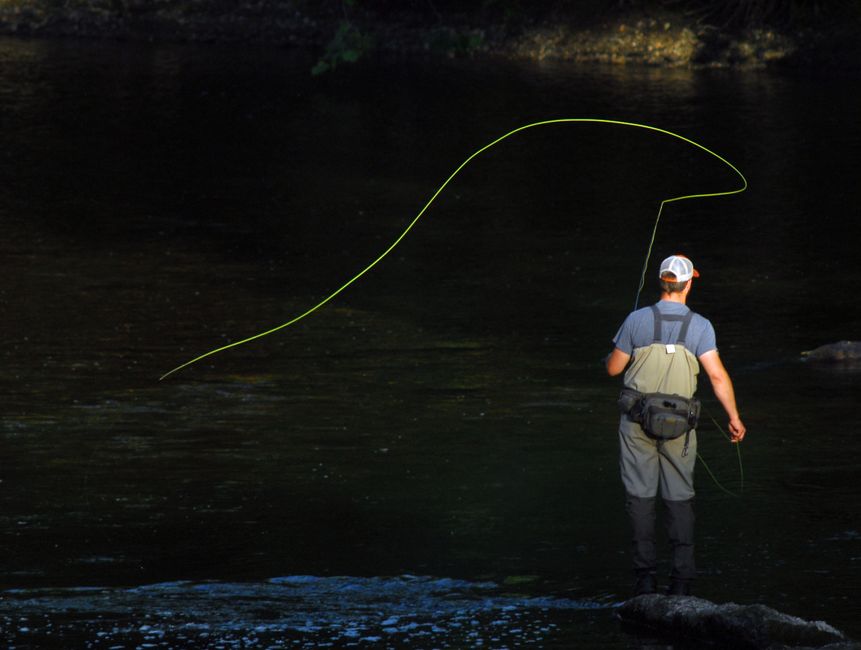
The push pole slips silently through the water, gliding the skiff across a glassy Louisiana marsh. Your eyes scan the edge of the spartina grass, searching for that subtle disturbance, that nervous water, the unmistakable golden flash of a tailing redfish. You make the cast—a tight loop that drops the fly with a whisper just ahead of its path. It’s a world we know, a rhythm we love. But what happens when that familiar green-and-gold horizon gives way to an endless, deep cobalt blue? What happens when the target isn’t a 10-pound bull red, but a 150-pound striped marlin?
For many of us seasoned marsh anglers, the ultimate challenge calls from the deep water off Cabo San Lucas. The dream is a lit-up striped marlin, aggressive and electric, slashing at a teaser just feet from the boat. It is, for many, the absolute pinnacle of fly fishing. The leap from the marsh to the marlin can feel intimidating, like learning a new language. The gear is heavier, the fish are exponentially more powerful, and the techniques are entirely different.
At southlouisianaflyfishing.com, we’ve spent our lives mastering the nuances of our home waters. That same passion for the hunt and obsession with technique has led us to conquer the bluewater challenge in Cabo. We understand the specific questions, the gear confusion, and the anxieties a marsh fisherman has when looking at the open ocean. We are here to bridge that gap for you. This guide is your roadmap, transforming that intimidating leap into an achievable, unforgettable adventure.
Key Takeaways
- Gear is Radically Different: Your trusted 8-weight redfish setup must stay home. Conquering Cabo requires heavy-duty 12-16wt rods, reels with powerful, sealed drags capable of holding hundreds of yards of backing, and specialized bluewater lines.
- Technique is a Team Sport: Unlike the solitary stalking of a redfish, bluewater fly fishing for marlin is a coordinated ballet involving the captain, the mate, and the angler in a “bait and switch” technique.
- Marlin Aren’t the Only Prize: While marlin are the ultimate goal, Cabo is a world-class fishery for dorado, tuna, and powerful inshore species like roosterfish, offering diverse opportunities on the fly.
- Timing is Everything: Your success depends on aligning your trip with your target species. Marlin season peaks in the fall, while other species have their own prime windows throughout the year.
- Your Guide is Your Quarterback: Your success hinges entirely on a charter captain and crew who are experienced specifically with fly fishing and the bait-and-switch method, not just conventional tackle.
TL;DR
Transitioning from marsh fly fishing to targeting marlin in Cabo requires a major upgrade in gear (12wt+ rods, high-capacity reels), a fundamental shift in technique to the team-based “bait and switch” method, and careful planning around seasonal fish patterns. While challenging, it’s an attainable summit for any dedicated angler with the right preparation and guidance.
Cabo San Lucas: The Perfect Bluewater Frontier
Cabo San Lucas offers a unique and accessible bluewater fly fishing experience that is the perfect next frontier for a seasoned marsh angler. It’s closer than you think and provides one of the most consistent opportunities on the planet to target billfish on the fly.
Why Your Marsh Skills Give You an Edge
While the environment is a world away from a Louisiana flat, the core skills you’ve painstakingly honed chasing redfish provide a powerful foundation for success in the bluewater. Your ability to remain patient during long lulls in the action is crucial. Most importantly, your proficiency in making a quick, accurate cast under pressure is the single most transferable skill you possess. When a marlin appears behind the boat, you have only seconds to deliver the fly, and your marsh experience has prepared you for that exact moment.
The Baja Peninsula: A Convergence of Rich Waters
Cabo sits at the unique geographical intersection where the deep, cool Pacific Ocean collides with the warm, nutrient-rich Sea of Cortez. This convergence creates an incredibly fertile upwelling, concentrating massive schools of baitfish like sardines, mackerel, and ballyhoo. This enormous biomass of food attracts the pelagic predators we dream of, making the waters off the Baja Peninsula one of the most target-rich environments in the world.
More Than Just Marlin: A Multi-Species Paradise
The true beauty of a trip to Cabo is the sheer variety of targets. If the marlin aren’t cooperating or you want to switch things up, the opportunities are endless. You can often find schools of brilliantly colored and acrobatic dorado (mahi-mahi), hard-fighting yellowfin tuna, or even blistering-fast wahoo. Each of these species provides incredible sport on a fly rod and ensures that there is almost always something willing to eat.
Gearing Up: From Marsh Finesse to Bluewater Brawn
Successfully targeting Cabo’s powerful bluewater species on the fly demands a significant step up in rod weight, reel drag, and line systems compared to typical marsh setups. Your 8-weight is a precision tool; a 14-weight is heavy artillery.
From 8-Weight to Heavyweight: The Rods You Need
Leave the 6, 7, and 8-weights at home. For dorado, tuna, and other medium-sized game, a stout 10-weight or 12-weight is the standard. For the main event—striped marlin—a 14-weight is the absolute minimum. Many experienced anglers prefer a 15 or 16-weight rod, not for casting, but for its immense lifting power and backbone, which is critical for applying maximum pressure during a prolonged fight.
The Reel Deal: Why a Powerful Drag is Non-Negotiable
A marlin or large tuna can strip hundreds of yards of backing in the blink of an eye. This is where your reel earns its keep. You need a high-quality, large-arbor reel with a smooth, powerful, and heat-resistant sealed drag system. Capacity is just as important; the reel must be capable of holding at least 400-500 yards of 50-60lb gel-spun backing, plus the fly line.
| Gear Component | Louisiana Marsh (Redfish) | Cabo Bluewater (Marlin) |
|---|---|---|
| Rod Weight | 7-9wt | 12-16wt |
| Reel | Standard Arbor, Basic Drag | Large Arbor, Sealed Drag |
| Backing | 150 yds of 20-30lb Dacron | 400+ yds of 50-60lb Gel Spun |
| Fly Line | Weight-Forward Floating | Big Game Taper (Floating/Intermediate) |
| Leader | 9-12 ft, 16-20lb Tippet | 9 ft, 20lb Class Tippet, 80-100lb Bite Tippet |
| Fly Size | 1/0 – 2/0 Hook | 6/0 – 8/0 Hook (10-14 inches long) |
Lines, Leaders, and Tippets: Building for Battle
Your line is your connection to the fish, and it needs to be up to the task. Most bluewater fishing is done with a heavy, weight-forward floating or intermediate sinking line specifically designed for big game. The leader system is critical and highly specialized. It typically consists of a 9-foot leader with a heavy butt section, a specific length of IGFA-rated “class tippet” (often 20lb test, which is the weak link for record-keeping purposes), and a stout bite tippet of 80-100lb monofilament to protect against the fish’s bill and abrasive skin.
The Flies: Big Profiles for Big Appetites
Marlin flies are designed to present a large, enticing profile that pushes a lot of water. They are often 10-14 inches long and tied on incredibly stout 6/0-8/0 hooks. Tube flies and large popper-style flies are popular choices. Classic color schemes that imitate baitfish like mackerel or bonito (pink/white, blue/white, green/yellow) are essential additions to your box.
Adapting Your Technique for the Bluewater Arena
The techniques that make you a successful marsh angler must be adapted for the fast-paced, team-oriented world of bluewater fly fishing in Cabo. The patient, solitary stalk is replaced by a high-adrenaline, coordinated effort where every second counts.
It’s a Team Sport: Understanding the “Bait and Switch”
This is the most critical concept to grasp and the standard method for targeting billfish on the fly.
Bait and Switch: A technique where the boat’s crew trolls a spread of hookless teasers to attract a predator like a marlin. Once a fish is “raised” and aggressively attacking the teasers, the captain puts the boat in neutral as the mate yanks the teasers away from the fish. This leaves an agitated, searching predator just a short cast from the boat, creating the perfect opportunity for the angler to present the fly.
Your job is to be ready, rod in hand, for the moment the captain yells, “He’s on the teaser!”
The Cast: Accuracy Over Distance
You are not making 100-foot hero casts across a flat. The fish will be close, often within 40-60 feet of the boat. The key is a quick, single false cast and an accurate presentation right into the “strike zone” where the teaser was just pulled from. You have a very short window—often just a few seconds—before the fish loses interest and sounds.
The Strip Set on Steroids
Just like setting the hook on a redfish, you absolutely do not lift the rod in a “trout set.” You will use a powerful, repeated strip set, using your line hand to drive that large hook deep into the marlin’s hard, bony jaw. Keep stripping hard until the line is tight and screaming off the reel.
Fighting the Fish: Applying Maximum Pressure
This is not a battle of finesse; it’s a game of angles, leverage, and pressure. Use low rod angles, pointing the rod directly at the fish, to apply maximum force from the butt section of the rod. Use the boat’s movement to your advantage and listen to your captain and mate—they have done this hundreds of times and will guide you on when to reel, when to pull, and how to use angles to tire the fish efficiently.
Cabo’s Cast of Characters: More Than Marlin
While marlin are the main event in Cabo, a fly fisherman’s guide should include a diverse cast of characters, from dorado and tuna to the hard-fighting roosterfish inshore.
The Main Event: Striped Marlin
Known for their incredible acrobatics, brilliant colors, and willingness to chase teasers right to the boat, striped marlin are the primary fly rod target in Cabo. They are most abundant from October through January, when the water temperatures are ideal.
The Crowd Pleasers: Dorado (Mahi-Mahi)
These brilliantly colored fish are a fly rodder’s dream. They are aggressive, acrobatic, and often found in large schools around floating debris or weed lines. Finding a school of dorado is a recipe for non-stop action on 10-12 weight rods. They are available for most of the year, providing a fantastic option anytime.
The Inshore Brawler: Roosterfish
If the offshore bite is slow or you want a change of pace, you can target the beaches and rocky points for the iconic roosterfish. Famous for their incredible speed and power, they present a completely different and equally rewarding challenge. Stalking a 40-pound roosterfish in the surf is an adrenaline rush that rivals any offshore experience.
Planning Your Conquest of Cabo
Planning a successful fly fishing trip to Cabo involves strategically choosing the right season for your target species and vetting a charter operation that understands the specific needs of a fly angler.
When to Go: A Seasonal Guide to Cabo’s Fishery
- Fall (October – December): This is the undisputed peak season for striped marlin and dorado. The water is warm, the bait is plentiful, and the weather is typically excellent.
- Winter/Spring (January – May): The marlin fishing remains strong, and this period coincides with the spectacular migration of humpback whales. Inshore fishing for sierra mackerel and roosterfish can be fantastic.
- Summer (June – September): The weather gets hotter, but this is the prime time for yellowfin tuna. You can still find marlin and some of the year’s biggest dorado during these months.
Choosing Your Guide: The Most Important Decision You’ll Make
Just as we at southlouisianaflyfishing.com specialize in poling for redfish, you need a Cabo captain who specializes in the bait-and-switch for fly anglers. This is not a skill every charter possesses. When vetting a guide, ask them directly: “How many marlin have you put fly anglers on this year?” and “Is your mate experienced in teasing fish for a fly cast?” Their answers will tell you everything you need to know. A dedicated fly fishing charter will have the proper heavy-duty rods and reels on board, even if you plan to bring your own. It shows they are serious about the discipline.
What to Expect on a Typical Day
Your day will start early, often before sunrise. The journey offshore can be anywhere from 10 to 30 miles to find the right water temperature, currents, and signs of life like birds or bait balls. The day is spent trolling the hookless teasers, with the angler on high alert, ready to cast at a moment’s notice. While the fishing is wild, remember that Cabo itself is a modern destination, so your time off the water will be comfortable and convenient.
From the Spartina to the Sea
The journey from the Louisiana marsh to the marlin-filled waters of Cabo is more than just a change in latitude; it’s an evolution as an angler. The challenge is immense, but the reward—seeing that iconic bill break the surface to inhale your fly—is a moment that will define your fishing life. The skills you’ve perfected in the shallow flats are the perfect launching pad for this deep-water adventure. You already have the foundation; this guide provides the blueprint. Now, it’s time to conquer Cabo.
For a comprehensive look at all the topics we cover, from local marsh tactics to international adventures, you can browse our complete post sitemap and page sitemap. You can also learn more about our team via our author sitemap.